At Dual Payments, we believe business owners should understand exactly where their payment processing money goes. Finding the lowest fee credit card processing option starts with reviewing the rates, transaction charges, and additional costs attached to an existing merchant account.
While a payment processor will offer you a great rate, there can be a number of hidden costs from interchange, processor fees, batching, statement and more. We would suggest looking at your monthly statements to understand what you are paying.
We aim to be as transparent as possible and you can make fairer comparisons. Understanding what you are paying for will help you make more informed decisions.
You will also know where you are paying for unnecessary costs and where you can improve your margins without impacting on the payment experience you provide to your customers.
Table of Contents
ToggleChoose a Transparent Pricing Structure
Not all pricing models will be suitable. Interchange plus pricing allows you to easily see what costs you are paying as you’re able to separate interchange fees and the processor markup.
In our guide we show you how your costs are determined based on your card type, interchange rate and any extra charges from your processor. Businesses comparing credit card processing merchant accounts should ask for a complete breakdown of these expenses before signing an agreement.
We also encourage you to look closely at tiered pricing. Different transaction types could have different rates. This could mean that although you’re being advertised at a low rate, your effective rate may be higher.
By comparing your statements to the pricing you’re being offered, business owners can feel more confident in making an informed decision which will better suit their transaction volumes and average sale.
Find a Merchant Account That Fits Your Business
The right payment arrangement should support your business operations rather than create additional financial uncertainty. When evaluating credit card processing merchant accounts, consider transaction volume, average purchase value, customer payment preferences, customer support, and the terms governing cancellation.
Consider if the provider has clear pricing and month to month contracts. This can give more flexibility than long term contracts which have expensive exit clauses.
Dual Payments talk about how it is important to work with a processor that understands what you as a merchant need. You want to ensure you have a good relationship with your service so you can get help if you have any issues with a disputed transaction, processing statements or account issues.
Don’t just compare prices but look at the whole package. Consider if they offer a good level of service, flexible contracts and clear pricing on all charges. This can make a big difference to your day to day.
Explore Zero Fee Processing Options
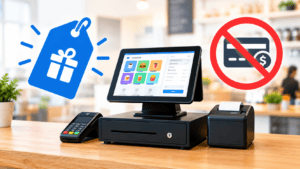
Processing fees can really add up. Fortunately, there is an option to use zero fee processing. This means eligible processing fees can be passed onto the customer.
Depending on how you set this up and what rules apply, you could offer a cash discount or clearly state there is a service fee for eligible card payments. Before setting this up you should be aware of what card network rules apply, what state laws apply and what you can put on your signage. Also know what applies to debit and credit.
We want to help you decide if this is right for your business. You should make sure you fully understand the terms and any charges that apply and clearly explain this to your customers before payment. Having a clear checkout will help avoid confusion, allow your customers to make informed decisions and help look after your business relationship.
Select Payment Terminals for Daily Operations
Your payment equipment should match how your business accepts payments. When reviewing credit card processing terminals, consider whether you need a standalone terminal or a broader point-of-sale system that combines payment acceptance with functions such as cash drawer and inventory management.
This will depend on your specific needs, the type of transactions you will be processing, and the features you want your staff to use. Our educational resources show the difference between a traditional card terminal and a POS system.
The cost of equipment can vary. In general, a credit card terminal can cost anywhere between the range of $200 to $750 depending on the features. A POS system can cost $1,000 plus.
These are general figures from the processing guide. When choosing your solution, it is important to compare equipment costs, software and any ongoing costs.
Reduce Fraud Risks and Improve Transaction Security
Security can play a key role in the cost of payment processing. We recommend that you ensure you follow the correct payment card acceptance process and make use of the security features in your payment equipment.
In our guidance we advise that using card swipe where appropriate and address verification (such as zip code checks) can help reduce certain fraud risks. You should also be aware of the differences between card present and manual/online payments, as verification requirements may be different and there may be different charges.
When comparing credit card processing terminals, look for equipment that supports the payment methods and security functions your business needs. No single measure can eliminate fraud, but consistent procedures, staff awareness, and suitable technology can help reduce avoidable problems.
We would recommend speaking to your provider to understand what security features they can offer and what requirements there will be for payments.
Review Statements, Contract Terms, and Hidden Charges
Your monthly statement will give you useful information on what you are actually paying in processing fees. It can be useful to work out how much you are paying per transaction by dividing the total amount processed by the total fees charged.
Then examine recurring account charges, transaction fees, monthly minimums, compliance fees, and any other listed expenses. Businesses using credit card processing merchant accounts should also check whether the rates match the original agreement and whether additional charges have appeared over time.
Our knowledge base explains how month-to-month contracts can be flexible. It’s important however to understand what happens if you want to cancel, so take note of your statements and pricing agreements. This will make it easier to see any changes. If there is anything you aren’t sure about, ask the provider for clarification.
By regularly reviewing your statements you’ll be able to pick up on any unexpected rises, get a clear understanding of what you are paying and ensure you’re making decisions based on what you’re actually paying in fees.
Find the Lowest Fee Credit Card Processing Solution
At Dual Payments, we like to advise our clients to look at a number of factors when choosing the best payment partner. Transparent pricing, good customer service, the right hardware and terms of agreement are all important.
When assessing the lowest fee credit card processing solution, begin by reviewing recent statements, identifying the fees you currently pay, and comparing written offers from potential providers. Ask how interchange, processor markups, equipment, and recurring charges affect your total costs.
Consider whether you would benefit from using a standard pricing structure or a qualifying zero fee scheme. We want to help you make informed payment choices.
With careful research and regular account reviews we can help business owners get the best payment solution for their business to ensure they are able to run their business sustainably while having greater clarity on their processing costs.